My journey
When Survival Becomes Normal: Living on High Alert and the Way Back to Yourself
When Survival Becomes Normal: Living on High Alert and the Way Back to Yourself
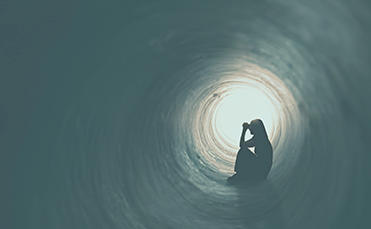
Right now, many people are not simply “stressed.” They are living on high alert.
You feel it in your body — in the way your mind keeps scanning for what might happen next, in the tension that never fully leaves your shoulders. There is war happening. There is uncertainty. There is fear everywhere you look. Even if you try to stay away from the news, the atmosphere reaches you. Conversations around you carry it. Social media carries it. The energy in the room carries it.
Your nervous system knows something is not safe. So you adapt. You become more alert, more reactive, more protective of yourself and the people you love. And slowly, survival mode becomes the way you live.
Why It Feels Like You’re Always on Alert
What you are experiencing is not only personal. It is also collective. For years now, many of us have been living through one crisis after another — war, instability, uncertainty, economic pressure, political tension. The nervous system doesn’t forget these experiences; it stores them. So when another crisis appears, the body immediately returns to the same state of alert.
Many people say, “We’re used to it. We’ve lived through worse before. We’re resilient.” And in a way, that may feel true. But sometimes what we call resilience is actually the brain protecting itself. When the system has been exposed to too much fear for too long, it starts creating a sense of control that isn’t entirely real. It tells you that you’re used to this, that you can handle it, that you know how to survive.
In reality, the body is simply adapting to constant stress. The mind learns how to stay functional. But something deeper inside you slowly shuts down in order to keep going. What looks like strength from the outside can sometimes be the nervous system protecting itself from feeling too much.
And that is how survival slowly becomes normal.
What Psychology Already Knew About This
In psychology, Abraham Maslow described something very important through his famous hierarchy of needs. At the very base of the pyramid are our most fundamental needs: survival and safety. Only when those needs feel secure can a human being gradually move upward toward creativity, meaning, connection, and eventually transcendence.
In other words, a person cannot live from their highest self when they feel unsafe. But if you look at what has been happening in the world for decades, something becomes clear. Many systems around us constantly keep people at the bottom of that pyramid — focused on survival, security, and fear. When survival is always threatened, people stay busy protecting themselves. They don’t question. They don’t pause. They don’t reconnect with themselves. They stay in survival.
And that is where the real trap begins.
Fear Is Not Only Physical — It’s Emotional
Most people know the fight, flight, or freeze response as a physical reaction. But these responses also show up emotionally.
Fight can look like constantly pushing against how you feel — trying to stay strong so that your fear or sadness doesn’t affect your children or the people around you.
Flight can look like pretending nothing is happening, staying busy or distracted so you don’t have to face what you feel.
Freeze can look like numbness — the moment when you stop reacting at all because feeling has become too overwhelming.
And many people today are experiencing exactly that. Not because they are weak, but because the system eventually protects itself by shutting things down.
When Fear Becomes the Way We Live
At The Inner Space, we often speak about two states of being that shape human life: fear and love. These are not just emotions that come and go. They are two very different ways of organizing life. Fear organizes life around protection, while love organizes life around truth.
When fear leads, everything becomes about control, defense, and survival. When love leads, something else becomes possible — connection, creativity, compassion, awareness.
If you look at the bigger picture of what is happening in the world today, you can see how often fear is the force driving events. Wars rarely begin from understanding or love. They grow from the same human patterns we all carry inside: the desire to control, the fear of losing power, the belief that someone must win no matter the cost.
And if you look closely, you will notice that this same dynamic does not only exist in politics or world events. It exists in our homes. You see it in families fighting over inheritance. You see it in couples fighting for control. You see it in relationships where the ego wants to win instead of understand.
What happens in the world is often a larger version of what already exists within us.
Why Awareness Matters Right Now
When human beings live only from fear, survival becomes the center of life. But when awareness begins, something shifts. You start to notice when fear is driving your reactions. You begin to see the difference between protecting yourself and disconnecting from yourself.
And that awareness is where real inner work begins.
At The Inner Space, this is exactly the space we explore — where psychology meets spirituality, where we look at the ego, the nervous system, and the deeper self that exists beyond survival. Not to escape what is happening in the world, but to remain human in the middle of it.
Because the real danger is not only what is happening outside of us.
The real danger is when fear slowly becomes the only way we know how to live.
A Space for This Work
My name is Nour Fayad. I’m a spiritual therapist and co-founder of The Inner Space.
If something in this reflection felt familiar to you, you are not alone. Many people today are trying to understand what it means to stay human, aware, and connected in times that constantly pull us into fear and survival.
This is the work we explore together — through conversations and gatherings, workshops, and one-on-one sessions that create space for awareness, reflection, and reconnection with yourself.
If you feel called to explore this work more deeply, you are always welcome to reach out.
Contact Information
WhatsApp: +961 81 904 934
Email: [email protected]
FAQ
What does it mean to live in survival mode?
Survival mode is when the nervous system stays in a constant state of alert, even when there is no immediate threat. It feels like always being on guard, unable to fully rest, and organizing your life around protection rather than presence.
Is it normal to feel numb or disconnected during difficult times?
Yes. Numbness is often the nervous system’s way of protecting itself when it has been exposed to too much fear for too long. It is not weakness — it is adaptation. But it is also a signal that something deeper needs attention.
What is the difference between fear and love as ways of living?
Fear organizes life around control, defense, and survival. Love organizes life around truth, connection, and meaning. Most of us have learned to live primarily from fear without realizing it. The shift begins with awareness — noticing when fear is driving your choices and creating space for something else.
Similar articles